Topic: Topic: According to Syntax = redeemable about the Republic of China. Kunming Air Battle Relived
+Syntax — 10.1 years ago #45,346
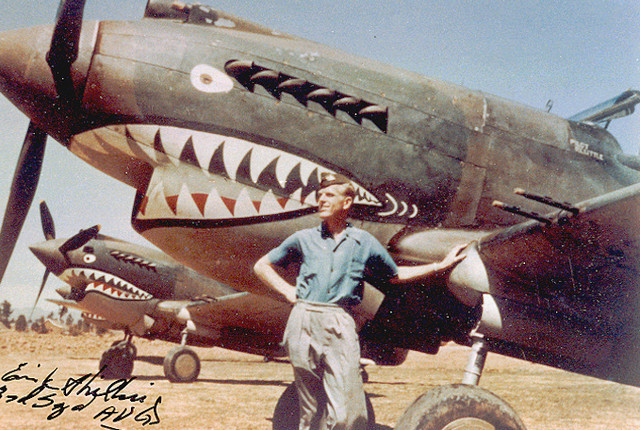 Kunming Air Battle Relived – First Fight For The Tigers Almost 702 Years Ago
It was a crisp December morning almost 70 years ago. The war with Japan was just 13 days old. Claire Chennault, commander of the American Volunteer Group stationed in China, under secret orders of President Roosevelt, was standing “dawn patrol” at Kunming airfield.
Their make-shift air raid alert relay system of Chinese volunteers strung out across the towns and villages throughout China began to report sounds of heavy aircraft making their way from Vietnam toward Kunming.
By 9:30 am it was certain Japanese bombers were headed for another bombing raid against the helpless people of Kunming. The Japanese virtually owned air superiority in the face of an ill equipped and poorly trained Chinese Air Force and had begun to grow complacent in their air campaign that sought to cut the supply line from the port of Rangoon to Burma – dubbed the Burma Road. Just the day before Kunming had been pounded by 8 to 10 twin engined Kawasaki Ki-48 medium bombers, code named “Lily” by allied pilots.
AVG 1st Squadon “Adam & Eves” flight leader Fritz Wolf observed: “The streets were strewn with bodies. The Chinese walked about the streets and picked up their dead, placing them in neat piles.”
But this time, things would be different. This time the Tigers would be waiting for them. It would be the first combat for the American Volunteer Group (AVG) since their aircrews and planes had arrived earlier that year in 1941. The 1st and 2nd Squadrons, Adam & Eves and the Panda Bears were moved up to Kunming from their initial base they shared with the British RAF in Toungoo outside of Rangoon. Their mission, along with the 3rd Squadron Hells Angels, was to protect the vital Burma Road supply route from both the North and South ends – Kunming airfield being the northern most location. The 1st and 2nd squadrons had only just arrived in Kunming the day before. As Chennault received the reports of Japanese bombers enroute to Kunming that morning of December 20th, he ordered both squadrons up to intercept them. The 16 Adam & Eves under squadron leader Sandy Sandell and Jack Newkirk’s 8 Panda Bears took off and climbed full throttle through the frigid air to 15,000 feet. Sandell’s Adam & Eves were to lead the assault leaving Newkirks’ Panda Bears as back-up circling the airfield.
One of the 1st squadron pilots, Jim Cross, later wrote: “It was bitter cold and my [windshield] was already frosted.” Roughly 10 minutes after takeoff, the Pandas spotted the Jap bomber formation first about 8 miles out and 2,000 feet below them. There were 10 of them arranged 4 in a lead diamond shape, with 3 each on either side in “V” formations. They were circling in to approach Kunming from the South, a prefered tactic by their commander Captain Fujii Tatsujiro. Newkirk had complained his electrical system was out and returned to the airfield. That left Sandell’s flight of 16 and the remaining 4 Panda Bears. Sandell divided them all up into groups of 4 each and the Panda’s Tiger flight rolled over and initiated the first attack on the bombers out of the sun. First-combat-jitters resulted in their firing pass beginning too soon with the bombers out of range. The next couple flights settled down and got the enemy in their sights before they began firing.
As the Tiger’s Curtiss P-40B Tomahawks started down on their next firing pass, the bombers lowered their tail gunners from the rear, lying prone on hinged platforms nicknamed “dustbins”. This allowed them to direct concentrated fire to the rear, while sacrificing some air speed due to the reduced aerodynamics. Charile Bond dove in for his first pass and pushed the gun trigger button on his stick. To his horror, his guns failed to fire!
He quickly realized he had forgotten to flip his electrical switches on to activate the circuit to the guns. Again, first combat nerves were working against him. He quickly snapped the switches to “on”, diving through the formation and rolled over on top for another firing pass. This time his guns thundered as he tore through the Jap formation once more. In his after action report he wrote: “All guns were blazing this time. I saw my tracers enter the fuselage of the bomber. I attacked again and again. Two bombers began to lag behind, trailing smoke.”
Fritz Wolf was also part of the assault. “My man was the outside bomber of the right-hand V. I dived down below him and came up from underneath. At 500 yards I let go with a quick burst of all guns. It was curtains for the rear gunner of the bomber. I could see my bullets rip into him and cut him to pieces.” At about 100 yards he fired again and the bomber he was targeting violently exploded in midair.
Ed Rector of the Panda Bears had been off-duty that Sunday with his aircraft grounded undergoing maintenance. When the melee began he raced back to the flight line and ordered the cowling put back on his plane. Soon after he was clawing for altitude, his Tomahawk’s Allison engine roaring at full throttle. Using his hands in typical fighter pilot style to describe the action later: “I saw eight damned airplanes out there engaging them. They were pulling up like this, and shooting and it was bizarre beyond belief.” He finally got positioned above the bomber group and rolled in for his first firing pass. He got a bomber in his sights and hammered away watching his bullets track into the Jap aircraft with deadly result.
The rear gunner was frantically trying to get a bead on him. Ed got him first: “I looked at him–right in the eye–and I’d shot away his whole jaw. I pulled up and looked back and he was on fire.” He roared past his victim at almost 500 mph barely missing him. “And I can see him [now], and I can see the rivets and the camouflage pattern of that damned bomber. I know that I missed him by inches.” He pulled up and over looking back and watched the bomber nose over engulfed in flames. Score 1 for Ed Rector.
Only 6 of the 10 bombers limped back to base that day. Many were so badly shot up they had to belly land because their gear wouldn’t come down. Kunming had been saved from another devastating attack on it’s helpless citizens. And the Tigers had won their first air battle over China. Later that day, the people of Kunming streamed out to the airport to thank them. They had endured a merciless year of bombing by the Japanese Army Air Force (JAAF). They brought a band led by the town’s mayor and children bearing bouquets of flowers and placing purple silk cloth around the necks of the base personnel, aircrews and pilots.
The Japanese 21st Hikotai bomber group never returned to attack Kunming again. They knew they were no match for the American fighter planes with the leering Tiger Shark mouths painted on their engine cowling. They decided they would prefer to keep their distance from the ferocious Flying Tigers of Kunming.
Their make-shift air raid alert relay system of Chinese volunteers strung out across the towns and villages throughout China began to report sounds of heavy aircraft making their way from Vietnam toward Kunming.
By 9:30 am it was certain Japanese bombers were headed for another bombing raid against the helpless people of Kunming. The Japanese virtually owned air superiority in the face of an ill equipped and poorly trained Chinese Air Force and had begun to grow complacent in their air campaign that sought to cut the supply line from the port of Rangoon to Burma – dubbed the Burma Road. Just the day before Kunming had been pounded by 8 to 10 twin engined Kawasaki Ki-48 medium bombers, code named “Lily” by allied pilots.
AVG 1st Squadon “Adam & Eves” flight leader Fritz Wolf observed: “The streets were strewn with bodies. The Chinese walked about the streets and picked up their dead, placing them in neat piles.”
But this time, things would be different. This time the Tigers would be waiting for them. It would be the first combat for the American Volunteer Group (AVG) since their aircrews and planes had arrived earlier that year in 1941. The 1st and 2nd Squadrons, Adam & Eves and the Panda Bears were moved up to Kunming from their initial base they shared with the British RAF in Toungoo outside of Rangoon. Their mission, along with the 3rd Squadron Hells Angels, was to protect the vital Burma Road supply route from both the North and South ends – Kunming airfield being the northern most location. The 1st and 2nd squadrons had only just arrived in Kunming the day before. As Chennault received the reports of Japanese bombers enroute to Kunming that morning of December 20th, he ordered both squadrons up to intercept them. The 16 Adam & Eves under squadron leader Sandy Sandell and Jack Newkirk’s 8 Panda Bears took off and climbed full throttle through the frigid air to 15,000 feet. Sandell’s Adam & Eves were to lead the assault leaving Newkirks’ Panda Bears as back-up circling the airfield.
One of the 1st squadron pilots, Jim Cross, later wrote: “It was bitter cold and my [windshield] was already frosted.” Roughly 10 minutes after takeoff, the Pandas spotted the Jap bomber formation first about 8 miles out and 2,000 feet below them. There were 10 of them arranged 4 in a lead diamond shape, with 3 each on either side in “V” formations. They were circling in to approach Kunming from the South, a prefered tactic by their commander Captain Fujii Tatsujiro. Newkirk had complained his electrical system was out and returned to the airfield. That left Sandell’s flight of 16 and the remaining 4 Panda Bears. Sandell divided them all up into groups of 4 each and the Panda’s Tiger flight rolled over and initiated the first attack on the bombers out of the sun. First-combat-jitters resulted in their firing pass beginning too soon with the bombers out of range. The next couple flights settled down and got the enemy in their sights before they began firing.
As the Tiger’s Curtiss P-40B Tomahawks started down on their next firing pass, the bombers lowered their tail gunners from the rear, lying prone on hinged platforms nicknamed “dustbins”. This allowed them to direct concentrated fire to the rear, while sacrificing some air speed due to the reduced aerodynamics. Charile Bond dove in for his first pass and pushed the gun trigger button on his stick. To his horror, his guns failed to fire!
He quickly realized he had forgotten to flip his electrical switches on to activate the circuit to the guns. Again, first combat nerves were working against him. He quickly snapped the switches to “on”, diving through the formation and rolled over on top for another firing pass. This time his guns thundered as he tore through the Jap formation once more. In his after action report he wrote: “All guns were blazing this time. I saw my tracers enter the fuselage of the bomber. I attacked again and again. Two bombers began to lag behind, trailing smoke.”
Fritz Wolf was also part of the assault. “My man was the outside bomber of the right-hand V. I dived down below him and came up from underneath. At 500 yards I let go with a quick burst of all guns. It was curtains for the rear gunner of the bomber. I could see my bullets rip into him and cut him to pieces.” At about 100 yards he fired again and the bomber he was targeting violently exploded in midair.
Ed Rector of the Panda Bears had been off-duty that Sunday with his aircraft grounded undergoing maintenance. When the melee began he raced back to the flight line and ordered the cowling put back on his plane. Soon after he was clawing for altitude, his Tomahawk’s Allison engine roaring at full throttle. Using his hands in typical fighter pilot style to describe the action later: “I saw eight damned airplanes out there engaging them. They were pulling up like this, and shooting and it was bizarre beyond belief.” He finally got positioned above the bomber group and rolled in for his first firing pass. He got a bomber in his sights and hammered away watching his bullets track into the Jap aircraft with deadly result.
The rear gunner was frantically trying to get a bead on him. Ed got him first: “I looked at him–right in the eye–and I’d shot away his whole jaw. I pulled up and looked back and he was on fire.” He roared past his victim at almost 500 mph barely missing him. “And I can see him [now], and I can see the rivets and the camouflage pattern of that damned bomber. I know that I missed him by inches.” He pulled up and over looking back and watched the bomber nose over engulfed in flames. Score 1 for Ed Rector.
Only 6 of the 10 bombers limped back to base that day. Many were so badly shot up they had to belly land because their gear wouldn’t come down. Kunming had been saved from another devastating attack on it’s helpless citizens. And the Tigers had won their first air battle over China. Later that day, the people of Kunming streamed out to the airport to thank them. They had endured a merciless year of bombing by the Japanese Army Air Force (JAAF). They brought a band led by the town’s mayor and children bearing bouquets of flowers and placing purple silk cloth around the necks of the base personnel, aircrews and pilots.
The Japanese 21st Hikotai bomber group never returned to attack Kunming again. They knew they were no match for the American fighter planes with the leering Tiger Shark mouths painted on their engine cowling. They decided they would prefer to keep their distance from the ferocious Flying Tigers of Kunming.
+Anonymous B — 10.1 years ago, 1 hour later[T] [B] #495,709
Yaaaaawwwwwnnnnn
+Anonymous C — 10.1 years ago, 12 minutes later, 1 hour after the original post[T] [B] #495,711
Please, do share some more ignorant USAmerican assumptions about Kunming and the Republic of China!
+Anonymous D — 10.1 years ago, 1 hour later, 2 hours after the original post[T] [B] #495,712

+Anonymous E — 10.1 years ago, 6 minutes later, 2 hours after the original post[T] [B] #495,713

+Anonymous F — 10.1 years ago, 2 minutes later, 2 hours after the original post[T] [B] #495,714
Start a new topic to continue this conversation.
Or browse the latest topics.