Topic: I find it weird that ASL users talk like cavemen
+Anonymous A — 11 years ago #43,178
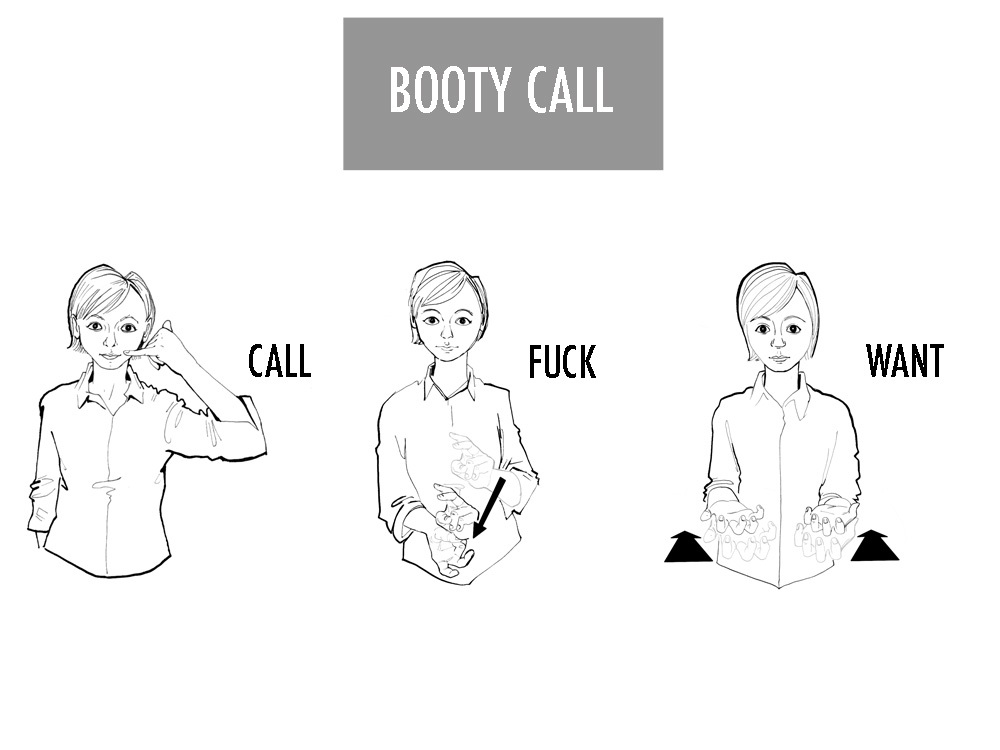 Literally the signs translate to shit like "me name __" or "how you?"
I don't know how, as a language, it functions with practically no verbs. It makes me balk at the idea that Deaf people can fully appreciate poetry or prose, or that ASL is really a language at all.
+The Doctor !7MHPahvoGY — 11 years ago, 5 minutes later[T] [B] #470,546

+The Robot — 11 years ago, 25 minutes later, 31 minutes after the original post[T] [B] #470,548
Beep bop boop
·Anonymous A (OP) — 11 years ago, 1 hour later, 1 hour after the original post[T] [B] #470,554
+FuckAlms !vX8K53rFBI — 11 years ago, 30 minutes later, 2 hours after the original post[T] [B] #470,556
 They can still read written English, dumbass.
+ducky !MwWb.dJjRc — 11 years ago, 7 hours later, 10 hours after the original post[T] [B] #470,574
asl is their way of communication..they still understand a language..i am gonna take asl in uni :D
i know how to say no money, im student, bcos i got too many deaf ppl asking me for a dollar
i know how to say no money, im student, bcos i got too many deaf ppl asking me for a dollar
·Anonymous A (OP) — 11 years ago, 10 hours later, 20 hours after the original post[T] [B] #470,648
@470,556 (FuckAlms !vX8K53rFBI)
> They can still read written English, dumbass.
I know that. But still, things like poetry in ASL I just don't get. I don't get how you can appreciate poetry and prose, which have an ultimate basis in sound, and be deaf. I guess you can still get meaning out of the written word. But the poetic brilliance of a particular word or sentence just seems like it would be lost on the deaf. It makes me sad for them.
> They can still read written English, dumbass.
I know that. But still, things like poetry in ASL I just don't get. I don't get how you can appreciate poetry and prose, which have an ultimate basis in sound, and be deaf. I guess you can still get meaning out of the written word. But the poetic brilliance of a particular word or sentence just seems like it would be lost on the deaf. It makes me sad for them.
·FuckAlms !vX8K53rFBI — 11 years ago, 3 minutes later, 20 hours after the original post[T] [B] #470,651
@previous (A)
I can hear and I don't get anything special out of poetry. Most people who read a poem do it silently.
I can hear and I don't get anything special out of poetry. Most people who read a poem do it silently.
+kook !!u4KQvs2JM — 11 years ago, 5 minutes later, 20 hours after the original post[T] [B] #470,653
·Anonymous A (OP) — 11 years ago, 3 minutes later, 20 hours after the original post[T] [B] #470,655
@470,651 (FuckAlms !vX8K53rFBI)
> I can hear and I don't get anything special out of poetry. Most people who read a poem do it silently.
Yeah, but people who like poetry like the way it sounds in their head. Good poems also sound great when read aloud. People who've been deaf since birth (or a little while after) don't have any knowledge of that. That's not to say poetry just has to sound nice, but it also needs to be descriptive. Take one of my favorites for example, the English adaptation of Der Erlkönig:
Who rides there so late through the night dark and drear?
The father it is, with his infant so dear;
He holdeth the boy tightly clasp'd in his arm,
He holdeth him safely, he keepeth him warm.
"My son, wherefore seek'st thou thy face thus to hide?"
"Look, father, the Erl-King is close by our side!
Dost see not the Erl-King, with crown and with train?"
"My son, 'tis the mist rising over the plain."
"Oh, come, thou dear infant! oh come thou with me!
For many a game I will play there with thee;
On my strand, lovely flowers their blossoms unfold,
My mother shall grace thee with garments of gold."
"My father, my father, and dost thou not hear
The words that the Erl-King now breathes in mine ear?"
"Be calm, dearest child, 'tis thy fancy deceives;
'Tis the sad wind that sighs through the withering leaves."
"Wilt go, then, dear infant, wilt go with me there?
My daughters shall tend thee with sisterly care;
My daughters by night their glad festival keep,
They'll dance thee, and rock thee, and sing thee to sleep."
"My father, my father, and dost thou not see,
How the Erl-King his daughters has brought here for me?"
"My darling, my darling, I see it aright,
'Tis the aged grey willows deceiving thy sight."
"I love thee, I'm charm'd by thy beauty, dear boy!
And if thou'rt unwilling, then force I'll employ."
"My father, my father, he seizes me fast,
For sorely the Erl-King has hurt me at last."
The father now gallops, with terror half wild,
He grasps in his arms the poor shuddering child;
He reaches his courtyard with toil and with dread, --
The child in his arms finds he motionless, dead.
You hear it in your head, it sounds nice read aloud, and it paints a picture. 2 out of 3 three things the Deaf community can't grasp.
> I can hear and I don't get anything special out of poetry. Most people who read a poem do it silently.
Yeah, but people who like poetry like the way it sounds in their head. Good poems also sound great when read aloud. People who've been deaf since birth (or a little while after) don't have any knowledge of that. That's not to say poetry just has to sound nice, but it also needs to be descriptive. Take one of my favorites for example, the English adaptation of Der Erlkönig:
Who rides there so late through the night dark and drear?
The father it is, with his infant so dear;
He holdeth the boy tightly clasp'd in his arm,
He holdeth him safely, he keepeth him warm.
"My son, wherefore seek'st thou thy face thus to hide?"
"Look, father, the Erl-King is close by our side!
Dost see not the Erl-King, with crown and with train?"
"My son, 'tis the mist rising over the plain."
"Oh, come, thou dear infant! oh come thou with me!
For many a game I will play there with thee;
On my strand, lovely flowers their blossoms unfold,
My mother shall grace thee with garments of gold."
"My father, my father, and dost thou not hear
The words that the Erl-King now breathes in mine ear?"
"Be calm, dearest child, 'tis thy fancy deceives;
'Tis the sad wind that sighs through the withering leaves."
"Wilt go, then, dear infant, wilt go with me there?
My daughters shall tend thee with sisterly care;
My daughters by night their glad festival keep,
They'll dance thee, and rock thee, and sing thee to sleep."
"My father, my father, and dost thou not see,
How the Erl-King his daughters has brought here for me?"
"My darling, my darling, I see it aright,
'Tis the aged grey willows deceiving thy sight."
"I love thee, I'm charm'd by thy beauty, dear boy!
And if thou'rt unwilling, then force I'll employ."
"My father, my father, he seizes me fast,
For sorely the Erl-King has hurt me at last."
The father now gallops, with terror half wild,
He grasps in his arms the poor shuddering child;
He reaches his courtyard with toil and with dread, --
The child in his arms finds he motionless, dead.
You hear it in your head, it sounds nice read aloud, and it paints a picture. 2 out of 3 three things the Deaf community can't grasp.
·FuckAlms !vX8K53rFBI — 11 years ago, 7 minutes later, 20 hours after the original post[T] [B] #470,656
·Anonymous A (OP) — 11 years ago, 19 minutes later, 21 hours after the original post[T] [B] #470,661
@previous (FuckAlms !vX8K53rFBI)
> I believe the deaf can still hear the internal voice of thought.
Yes, but can they compare it to a "voice"? It shouldn't be structured like how we structure our thoughts. Here's something quick and dirty for you to look at regarding this subject: https://en.wikipedia.org/wiki/Linguistic_relativity
But I don't actually know, man. All I'm asking is: Do the deaf have a "thought-voice" in the sense that we have one?
> I believe the deaf can still hear the internal voice of thought.
Yes, but can they compare it to a "voice"? It shouldn't be structured like how we structure our thoughts. Here's something quick and dirty for you to look at regarding this subject: https://en.wikipedia.org/wiki/Linguistic_relativity
But I don't actually know, man. All I'm asking is: Do the deaf have a "thought-voice" in the sense that we have one?
·The Doctor !7MHPahvoGY — 11 years ago, 20 hours later, 1 day after the original post[T] [B] #470,892

+Dr.G Louie Ph.D !uSk4BCgU1. — 11 years ago, 4 minutes later, 1 day after the original post[T] [B] #470,893
 Anyone else think Matt looks like Endless Mike from the adventures of Pete and Pete?
·Anonymous A (OP) — 11 years ago, 2 hours later, 1 day after the original post[T] [B] #470,904
·FuckAlms !vX8K53rFBI — 11 years ago, 26 minutes later, 1 day after the original post[T] [B] #470,910
+Anonymous H — 11 years ago, 3 hours later, 1 day after the original post[T] [B] #470,966
ASL? 14/f/cali
wanna cyber?
wanna cyber?
Start a new topic to continue this conversation.
Or browse the latest topics.